

Torta Pasqualina | Easter Artichoke Pie
A Ligurian Easter tradition, straight from my mother-in-law's kitchen

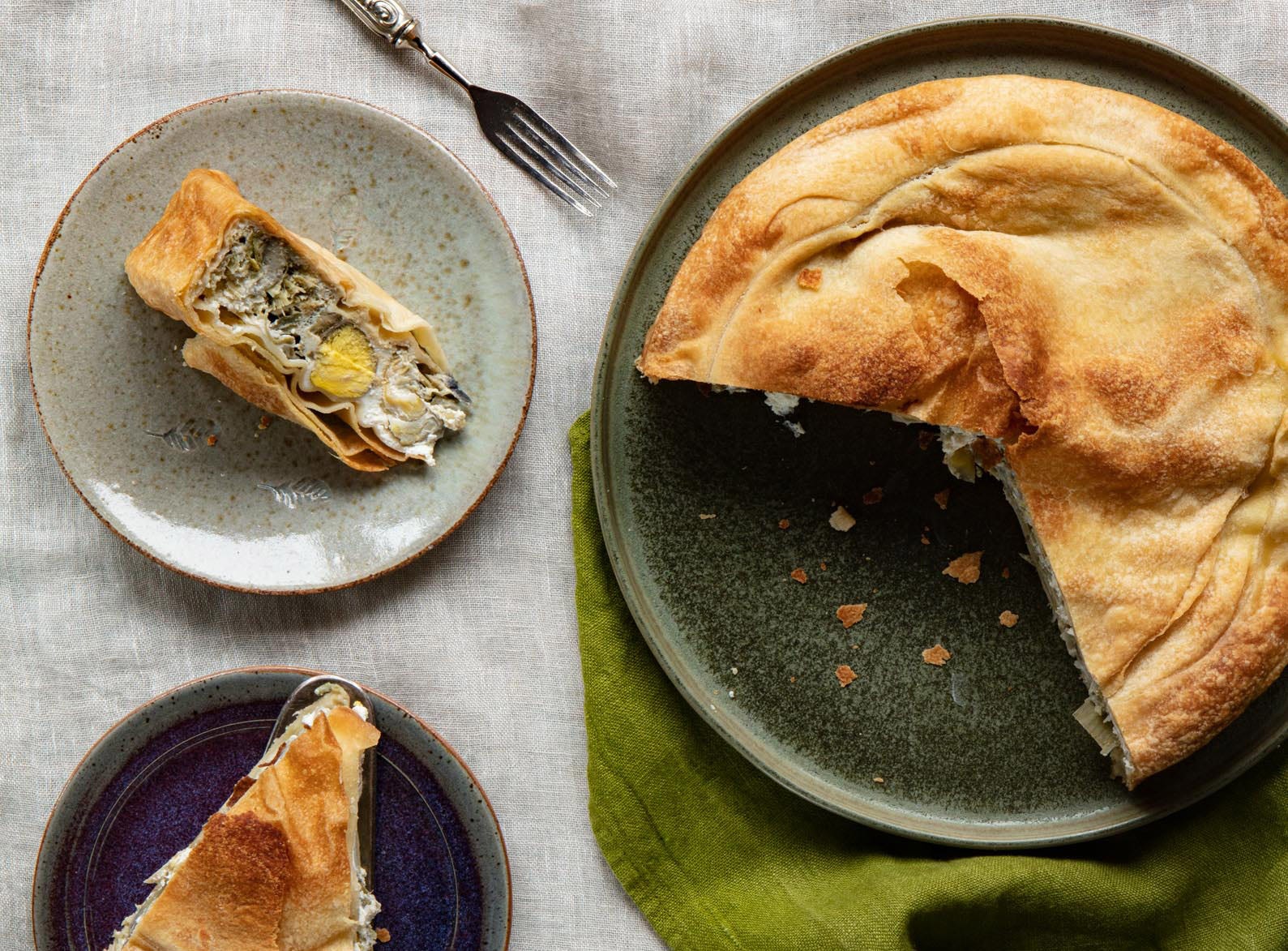
This week, we’ll pack the car full of kids, chocolate, wine, and head down to the seaside in Liguria for the Easter holiday. Amongst the parade of delicious things we will make and eat over the weekend, I’m most looking forward to the Torta Pasqualina, a vegetable-packed savory pie that is the symbol of Easter in Liguria.
In this excerpt from my book, Liguria, The Cookbook, I recount my first time making a Torta Pasqualina:
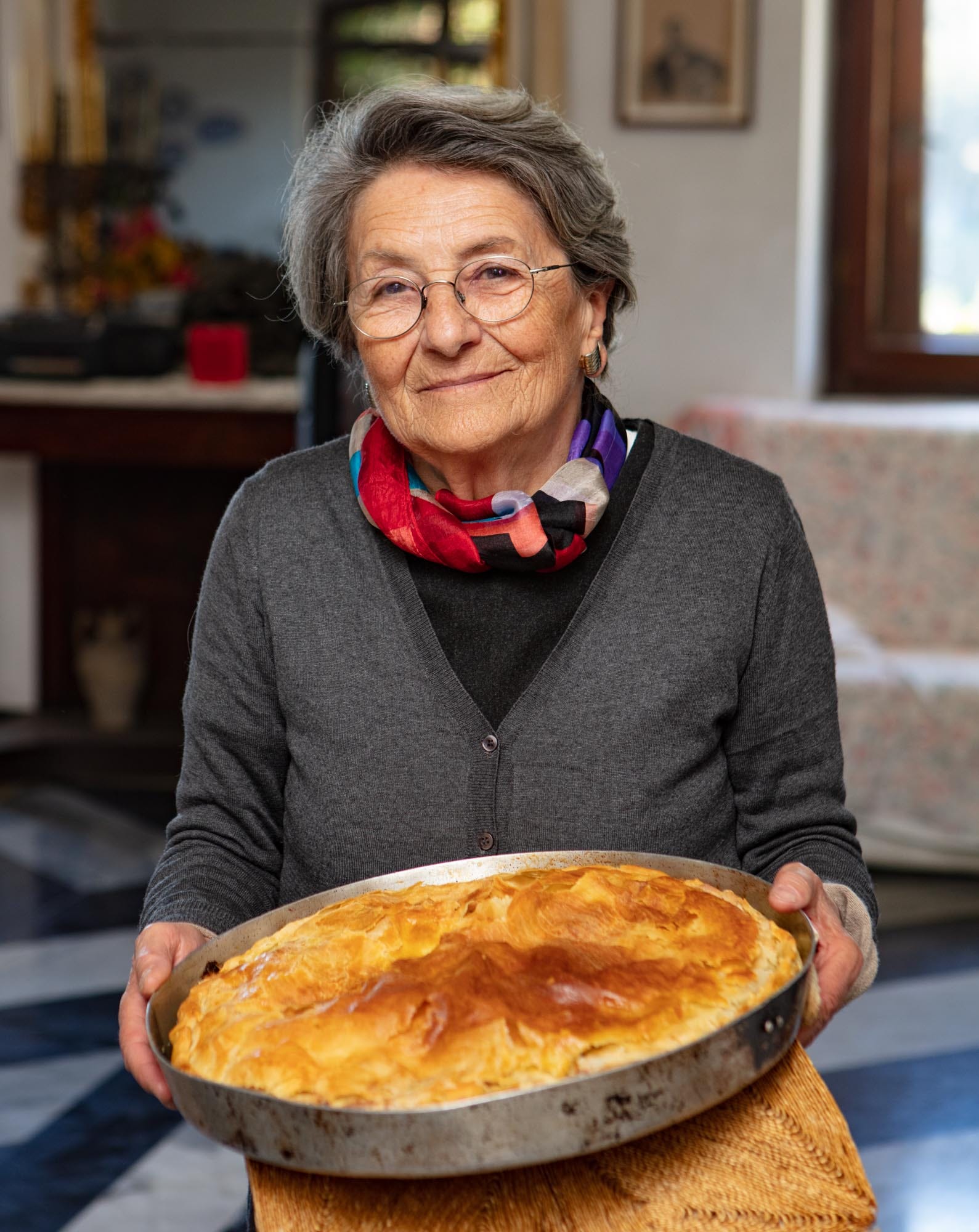
My mother-in-law, Fernanda, is famous for her torta Pasqualina, but rarely makes the dough from scratch anymore, opting instead for a store-bought puff pastry. However, as we spent the notorious Spring of 2020 on lockdown together in Moneglia, I cajoled her into teaching me the whole recipe from scratch. It was early on Easter morning; we were both still in pajamas. She rolled up the sleeves of her yellow bathrobe and dumped a pile of flour on the marble table in the kitchen, added some water, and began kneading.
“My mother would roll the dough out with this, which I think was my grandmother’s,” she said as she reached for a three-foot-long, time-worn wooden pin and began rolling. “And then she stretched the dough with her hands, until you could virtually see through it.” Fernanda was straining her memory for the correct movements, as she tossed the dough over the backs of her hands. “In Genova, they say the Pasqualina should contain thirty-three layers of dough, one for each year of Christ’s life, but nobody ever makes that many.”
After stacking about ten sheets underneath the filling, and seven on top, she showed me how to lift up a tiny corner of the topmost layers and blow air into it, inflating the pie like a balloon. She quickly sealed the hole, trapping the air inside, before transferring the whole thing to the oven, resulting in a puffy, extra flaky, golden surface.
Besides the elaborately layered crust, this pie differs from other Ligurian torte because whole eggs are cracked into the filling; everyone at the Easter table hopes their slice contains one. My friend Valentina Venuti, who teaches cooking lessons at her agriturismo in Leivi, let me in on a little trick: She uses quail eggs in her torta Pasqualina. You can fit ten of the tiny eggs into the pie, which ensures every guest finds one in their slice.
Note: you can use frozen artichoke hearts instead of fresh to drastically cut down on the preparation time. Simply boil eighteen ounces of them in salted water until tender before proceeding with the recipe. You may also substitute the artichokes completely with spinach, chard, or other cooked greens.
Torta Pasqualina
For the pasta matta (crust):
4 cups (510 g) bread flour
1 cup (240 ml) room temperature water
4 tablespoons (60 ml) extra-virgin olive oil, plus more for brushing
1 teaspoon salt
For the filling:
Juice of ½ lemon
10 small to medium of the most tender artichokes you can find
Extra-virgin olive oil
1 small white onion, halved and thinly sliced
Salt and pepper to taste
⅔ cup (160 g) whole milk ricotta
¼ cup (60 g) Greek yogurt
1½ ounces (43 g) freshly grated Parmigiano-Reggiano (about ½ cup, packed)
1 teaspoon fresh marjoram
5 medium eggs (or 1 chicken egg plus 10 quail eggs)
Make the pasta matta:
Combine flour and water in the bowl of a stand mixer fitted with a dough hook. Knead on medium-low speed until a shaggy dough forms, about 5 minutes. Add olive oil and salt and continue kneading until dough is soft, smooth, and elastic, about another 7 minutes. Remove from mixer, form into a ball, and wrap tightly in plastic wrap. Let rest at room temperature for 30 minutes.
Remove plastic wrap (do not discard) and cut the dough equally into 12 pieces. Cover the pieces with the plastic wrap to keep them from drying out, and let rest for another 10 minutes.
Prepare the filling:
Preheat oven to 350°F (180°C). Lightly brush a 9-inch cake pan (preferably springform) with olive oil; set aside.
Fill a large bowl halfway full with cold water, add lemon juice. Cut off the top part of each artichoke, trim the stem, remove and discard tough outer leaves until you’re only left with the softer lighter leaves closer to the center. Cut it in half and scoop out the hairy choke, if present. Cut each half into thin spears. As you work, transfer finished artichoke pieces to the lemon water to soak.
Heat 2 tablespoons olive oil in a large frying pan over medium-high heat. Add onion and cook, stirring occasionally, until translucent, 5 to 7 minutes. Drain artichokes and transfer to the pan. Add ¼ teaspoon salt and cook, stirring occasionally, until artichokes are tender, about 7 to 10 minutes. Transfer mixture to a large bowl and set aside to cool.
In a small bowl, stir together ricotta, yogurt, and ¼ teaspoon salt; set aside.
Stir Parmigiano into the artichoke mixture; add marjoram, more salt, and pepper to taste. Add 1 egg and stir to combine.
Assemble and bake:
Place a piece of dough on a lightly floured work surface and roll into a disk with a flour-dusted rolling pin. Contrary to rolling out typical pie dough, you will want to roll out the edges first, rather than starting from the center of the disk, since the edges tend to shrink back as you roll. Begin rolling out the edges of the dough, turning the disk in a clockwise motion until it is large, round, and paper-thin. Dust your hands with flour, gently pick up the disk, and drape over the backs of your hands. Carefully stretch the dough, moving your hands away from each other and rotating the dough in order to stretch evenly.
When dough is very thin and translucent, lay it over the cake pan. There should be plenty of overlap and it’s okay if it doesn’t sink to the bottom of the dish, as the filling will weigh it down later. Brush the sheet lightly with olive oil. Repeat the rolling and stretching process with more pieces of dough, layering them in the cake pan and brushing each sheet with olive oil. I say the minimum is 4 layers underneath and 3 on top, though I usually opt for twice that many.
As soon as the bottom layers are complete, scoop artichoke mixture into the pan. Spread the ricotta mixture in an even layer over artichokes. Create 4 egg-sized indentations in the filling (or 10 smaller ones if you’re using quail eggs). Crack an egg into each hole and sprinkle each with salt and pepper.
Cover the pie with the top layers, brushing each layer with oil. If desired, leave a small hole in the seam between the top and bottom layers of the pie at the edge of the pan after trimming away the excess, and blow into it, with the help of a straw, inflating the top of the pie like a balloon. Quickly seal the dough back together, trapping the air inside. Sprinkle the surface with a pinch of salt.
Bake the torta until golden and set, for 40 to 50 minutes. (If the surface browns too quickly, tent with aluminum foil.) Let cool for 1 hour before cutting and serving.
*Recipe and photos from Liguria the Cookbook: Rizzoli, 2021.
Love seeing that beautiful photo of the lovely Fernanda! Wishing we were all together 💗